


You’ve given your first technical hire equity. They’re vested, committed, and building the core of your product. That’s the story you want to tell acquirers someday.
Here’s the story that actually plays out in due diligence, more often than most founders expect.
The acquirer’s legal team asks a straightforward question: who owns the inventions your team created? You point to your employment agreements. Their counsel reads through them. The IP assignment language isn’t there – or it’s incomplete. Your technical lead holds equity in the company but may also hold rights to the innovations that make the company worth acquiring.
The deal doesn’t die immediately. It just gets complicated in ways that cost you time, money, and leverage at exactly the wrong moment.
Why This Happens to Good Founders
This isn’t a story about negligence. It’s a story about timing.
Early hires often come on board before formal documentation practices are established. You’re moving fast, you’re grateful someone believes in the vision, and you get the equity grant done because that feels like the important thing. The employment agreement is a template you found or borrowed. It covers the basics.
What it often doesn’t cover – specifically and completely – is invention assignment.
Most founders assume the employment agreement handles IP ownership. Sometimes it does. But “sometimes” is not a legal standard, and the gaps are more common than you’d think, especially for hires made in the first 12 to 18 months of a company’s life.
Three Documents That Should Work Together
When an employee receives equity and has any role in building your product, three documents should align:
The employment agreement with assignment clause. This is the foundation. It should explicitly state that inventions, code, designs, and innovations created in the scope of employment belong to the company. Vague language about “work product” often isn’t enough. The clause needs to cover inventions related to the company’s current and reasonably anticipated business.
The equity grant documentation. Stock option agreements and restricted stock grants establish the employee’s ownership stake in the company. But they say nothing about who owns what the employee creates. These two documents operate in parallel – and that parallel is exactly where the gap lives.
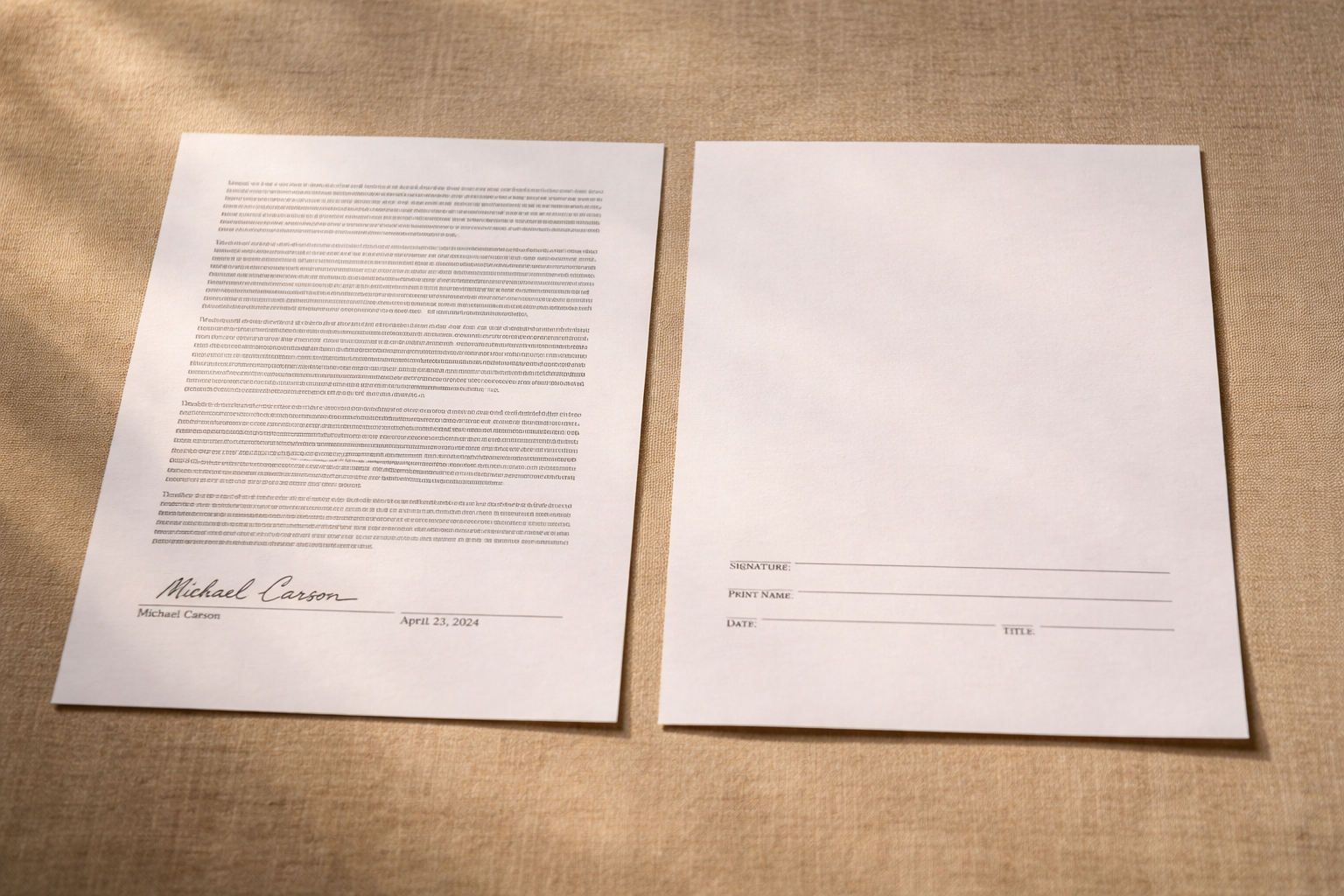
A standalone inventor agreement for technical roles. For engineers, developers, designers, and others in invention-generating roles, a separate inventor agreement adds a layer of clarity that holds up better under scrutiny. It’s specific, it’s signed, and it removes ambiguity about which innovations are covered and when.
Consider this scenario: a company is 18 months from a meaningful exit. Their first developer – a co-inventor of the core algorithm – holds equity and a standard employment agreement pulled from a template library. The inventor agreement was never drafted. The employment agreement’s assignment clause is generic and arguably incomplete. Untangling that situation during active M&A conversations is expensive, slow, and sometimes impossible to do cleanly.
The fix at the beginning? A few hours of attorney time.
What Quarterly IP Check-Ins Actually Catch
This is the kind of gap that surfaces in a Garcia-Zamor quarterly IP check-in – and it’s exactly why that check-in exists.
Inside the Premium tier, quarterly IP reviews are built into the engagement. We’re looking at your employment agreements, your equity documentation, your contractor agreements, and your invention assignment coverage as a set – not as isolated documents. When we see a technical hire who received equity without a concurrent inventor agreement, we flag it and fix it while the relationship is intact and the employee is still friendly.
IP issue spotting is included across all Garcia-Zamor tiers. Even at the Starter level, we’re watching for these gaps during contract reviews and check-ins. The goal is always the same: catch the problem when it’s a two-hour fix, not a two-month negotiation.
The Assumption Worth Challenging
If you have early employees holding equity – especially technical employees – it’s worth asking a direct question: do your employment agreements contain specific, complete invention assignment language? Not general work product language. Specific assignment.
If you’re not certain, that uncertainty is worth resolving now.
Most founders who’ve been through a due diligence process will tell you the same thing: the legal questions you didn’t think to ask in year one are the ones that show up in year four at the worst possible time.
Have you audited your employment agreements for IP assignment coverage? If you’re not sure where to start, drop a question in the comments – happy to point you toward what to look for.
About Garcia-Zamor: We’re the fractional general counsel for innovators – protecting both your business operations and your intellectual property. Ruy Garcia-Zamor leads business growth strategy, Elliott Alderman (former Copyright Office attorney, Miami Heat IP counsel) handles intellectual property, and Claudia Castillo specializes in employment law. Contact us at garcia-zamor.com or (410) 531-9853.